How to Rank on ChatGPT: A Practical Guide for UK Businesses (2026)
Your go-to styling guide for this summer’s most versatile shades.
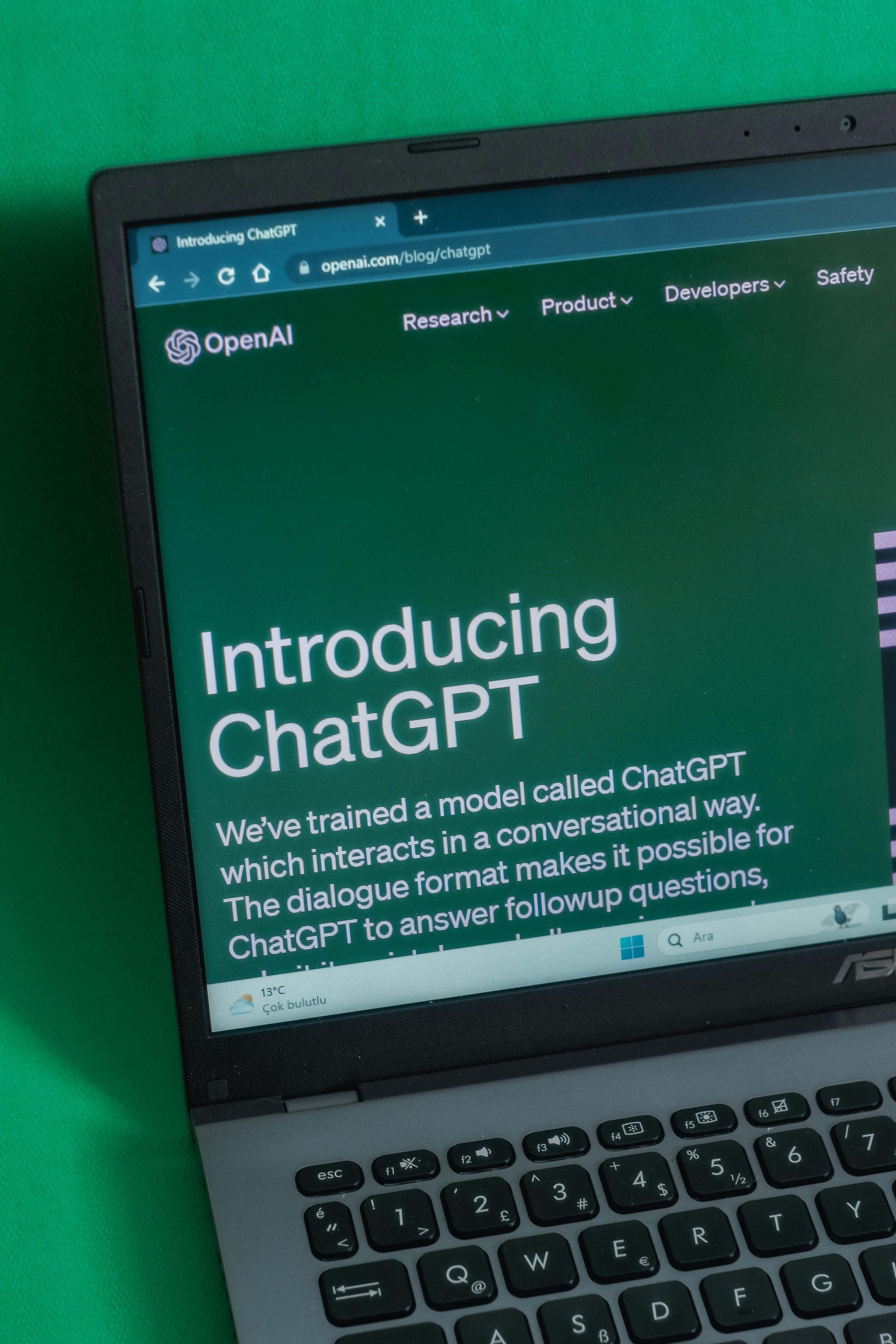
If you've noticed that ChatGPT, Perplexity, and Google's AI Overviews are now answering questions that used to send users straight to your website — you're not imagining it. AI-powered search has fundamentally changed how UK consumers and B2B buyers discover businesses, products, and services online.
The good news? You can influence which businesses ChatGPT recommends. It's not luck — it's strategy. This guide breaks down exactly what you need to do to get your UK business cited, recommended, and visible in ChatGPT responses in 2026.
Quick Definition — Generative Engine Optimisation (GEO): The practice of making your brand, content, and website easy for AI language models — like ChatGPT, Perplexity, and Google Gemini — to find, trust, and cite. Think of it as the next evolution of SEO.
1. Understand How ChatGPT Actually Finds Information
Before you can rank on ChatGPT, you need to understand how it works. ChatGPT does not crawl the web in real time the way Google does. Instead, it draws on:
Its training data — vast amounts of web content scraped before its knowledge cutoff
Bing search integration — when users ask current questions in browsing mode, ChatGPT fetches live Bing results
Trusted third-party sources — Wikipedia, Reddit, industry publications, government (GOV.UK) and academic (.ac.uk) sites
Brand mentions and citations across the web — the more credible sources reference you, the more likely ChatGPT is to surface your brand
For UK businesses, this means your path to ChatGPT visibility runs through Bing (not just Google), high-authority UK publications, and a consistent, trustworthy online presence.
UK-Specific Note: Bing has a significantly larger market share in the UK than globally — particularly among older demographics and enterprise users. Ranking on Bing is a direct lever for ChatGPT visibility. Don't neglect Bing Search Console.
2. Build a Foundation of Topical Authority
ChatGPT recommends sources it considers authoritative on a topic. To be seen as an authority, you need to demonstrate genuine depth of expertise — not just publish a few blog posts.
What topical authority looks like in practice:
Cover your niche comprehensively — write about every angle of your subject, from beginner guides to advanced explainers
Create content clusters — a pillar page supported by related blog posts that link back to it
Answer the specific questions your audience asks — use tools like AnswerThePublic, AlsoAsked, and Semrush's Keyword Magic to find question-based queries
Keep content updated — AI models favour content that reflects current practices, laws, and market conditions (especially important in regulated UK sectors like finance, healthcare, and law)
For example, if you run an accountancy firm in Manchester, you should have content covering UK self-assessment deadlines, HMRC compliance, Making Tax Digital, IR35 rules, and VAT registration thresholds — not just a generic "accountancy services" page.
3. Optimise Your Content for AI Retrieval (AEO)
Answer Engine Optimisation (AEO) is the technical side of GEO. It's about structuring your content so AI systems can easily extract and cite it. Here's what works:
Use clear, direct answers at the top of each page
When someone asks ChatGPT a question, it looks for content that answers it directly — not content buried in paragraphs three screens down. Lead with the answer, then expand with supporting detail. This mirrors the inverted pyramid structure used in journalism.
Use FAQ sections with proper schema markup
FAQ schema tells search engines (and by extension, AI crawlers) that your content contains structured Q&A pairs. Add FAQPage schema to your key pages using JSON-LD. UK-specific questions — such as "Do I need to register for VAT in the UK?" or "What is the UK minimum wage in 2026?" — are frequently pulled into AI answers.
Write in a conversational, question-led style
AI models are trained on human conversation. Content written in a natural, clear, question-and-answer style is more likely to be extracted and cited than dense, jargon-heavy text. Use H2s and H3s that mirror real questions people ask.
Keep sentences short and factual
Avoid waffle. ChatGPT is more likely to quote a crisp, factual sentence — "73% of UK SMEs say they plan to invest in AI tools in 2026" — than a vague paragraph about general trends.
4. Get Mentioned on Sources ChatGPT Trusts
One of the most powerful ways to appear in ChatGPT answers is to be mentioned on the sources it already trusts. For UK businesses, these include:
BBC News and BBC Business — authoritative, widely crawled
The Guardian, The Times, The Telegraph — high-authority UK press
GOV.UK — government sources carry significant trust signals
Which? — especially for consumer-facing UK businesses
Trustpilot UK — review signals influence brand perception in AI responses
Industry trade bodies — RICS, Law Society, ICAEW, NHS Digital, and others relevant to your sector
Wikipedia — a direct source for ChatGPT; if your brand or topic has a Wikipedia page, that content is highly likely to be cited
LinkedIn — professional content on LinkedIn is indexed and referenced in B2B AI answers
The practical strategy here is PR-led SEO. Secure coverage in UK publications through press releases, expert commentary (via platforms like Qwoted), thought leadership articles, and case studies. Each mention builds the web of signals that tells AI models your brand is credible.
Key Insight: Think of AI visibility like word-of-mouth at scale. ChatGPT recommends brands that the web's most trusted sources already recommend. Your goal is to become the brand those sources talk about.
5. Claim and Optimise Your Brand's Knowledge Footprint
ChatGPT builds a picture of your brand from every mention it can find online. The more consistent and detailed that picture, the more confident it is in recommending you. Here's how to expand your knowledge footprint:
Google Business Profile (GBP)
Keep your GBP fully updated — correct address, phone, opening hours, service descriptions, and category tags. While GBP is a Google product, it feeds into the broader web of structured data that AI models draw from.
Schema markup on your website
Implement Organisation schema, LocalBusiness schema, and Person schema (for key team members) on your site. This structured data gives AI crawlers explicit, machine-readable information about who you are, what you do, and where you operate.
Consistent NAP (Name, Address, Phone) across directories
Ensure your business details are identical across Companies House, Trustpilot, Yell.com, Yelp UK, Checkatrade (for trades), and any industry directories relevant to your sector. Inconsistency creates uncertainty for AI models.
Wikipedia and Wikidata
If your business or key personnel are notable enough to warrant a Wikipedia page, pursue it. Wikidata — Wikipedia's structured database — is one of the most heavily cited sources in AI training data.
6. Build High-Quality UK Backlinks
Backlinks remain a strong proxy for authority — and authority is the currency of AI visibility. For UK businesses specifically, links from .co.uk and .org.uk domains carry particular weight when AI models assess your relevance to UK users.
Focus your link-building efforts on:
UK trade associations and chambers of commerce — most offer member directory listings
Local UK news sites — stories with genuine local news value earn regional press coverage
Guest posts on established UK business publications — Real Business, Business Advice, Startups.co.uk
University and research institution partnerships — .ac.uk links carry strong authority signals
Charity partnerships — collaborating with UK charities often generates .org.uk links and press mentions
7. Leverage Reviews and Social Proof
When ChatGPT is asked "Who is the best [service] in [UK city]?", it draws heavily on aggregated review signals. Your review strategy should be proactive:
Trustpilot UK — one of the most trusted review platforms for UK consumers; actively request reviews from customers after every transaction
Google Reviews — still essential; high review counts with strong average ratings improve AI recommendations
Checkatrade / Rated People — for UK tradespeople and contractors, these platforms are directly cited by AI models
Yell.com — a legacy but still-crawled UK directory worth maintaining
Respond to all reviews — AI models pick up on engagement signals; businesses that respond appear more active and trustworthy
8. Create Content That Gets Shared and Cited
Original research, statistics, and data are citation magnets. If you produce a piece of research — even a simple survey of 100 UK customers — that contains a unique statistic, other websites will link to it and cite it. When those citations accumulate, AI models start to recognise your brand as a primary source.
Content formats that earn citations:
Annual industry reports — "The State of [Your Industry] in the UK 2026"
Original survey data — polling your customer base or industry peers
Calculators and tools — a VAT calculator, salary calculator, or mortgage affordability tool earns backlinks passively over time
Comprehensive guides — definitive, long-form guides that become the go-to reference on a topic
Expert roundups — featuring quotes from named UK industry experts builds credibility and earns shares
9. Monitor Your AI Visibility
You can't manage what you don't measure. Tracking your AI visibility requires a slightly different approach to traditional SEO monitoring:
Ask ChatGPT directly — search for your target queries and see if your brand appears. Do this regularly and in private browsing mode for unbiased results
Monitor brand mentions — use tools like Google Alerts, Mention.com, or Brand24 to track where your brand name appears online
Track Bing rankings — since ChatGPT uses Bing for live browsing, Bing position directly influences AI citation frequency
Check Perplexity.ai — Perplexity is heavily used by UK tech professionals and researchers; test your visibility there regularly
Use AI Visibility Score tools — platforms like Authoritas and SE Ranking now offer GEO and AEO tracking features
10. Practical 90-Day Action Plan for UK Businesses
Month 1 — Fix the Foundations
Audit your website's technical SEO — fix crawl errors, improve page speed, implement HTTPS
Add Organisation and LocalBusiness schema markup to your homepage
Update all directory listings for NAP consistency across Google, Bing, Yell, and Companies House
Set up Bing Webmaster Tools and submit your sitemap
Identify 10 core questions your customers ask and create dedicated content pages for each
Month 2 — Build Authority Signals
Launch a PR campaign — pitch expert commentary to 3–5 UK publications relevant to your sector
Create one piece of original research or a unique data-led piece of content
Implement FAQ schema on your top 5 most-visited pages
Begin a proactive review generation campaign on Trustpilot and Google
Join 2–3 UK trade associations for directory listings and backlink opportunities
Month 3 — Scale and Monitor
Publish your first comprehensive guide (2,000+ words) on your primary topic
Secure at least 3 guest articles or expert quotes in UK publications
Set up monthly ChatGPT and Perplexity visibility checks for your target queries
Review and update existing content for accuracy and freshness
Build internal links between your new and existing content
The Bottom Line
Ranking on ChatGPT is not a separate strategy from good SEO — it's an evolution of it. The businesses that will dominate AI search in the UK over the next 2–3 years are the ones building genuine authority today: publishing trustworthy content, earning mentions in respected publications, maintaining a consistent brand presence across the web, and answering the questions their customers are actually asking.
The algorithms change. The fundamentals don't. Be the most credible, most helpful, most visible business in your niche — and AI will do the rest.
Key Takeaways:
ChatGPT sources from Bing, trusted UK publications, and consistent brand signals — optimise for all three
Structure your content with clear answers, FAQ schema, and question-led headings
Build topical authority through comprehensive, regularly updated content in your niche
Earn mentions on high-authority UK sources: BBC, GOV.UK, trade bodies, Wikipedia
Monitor your AI visibility monthly across ChatGPT, Perplexity, and Bing — it's a moving target
Q1. Can I directly submit my website to ChatGPT to get ranked?
No. ChatGPT does not have a submission portal like Google Search Console. However, you can submit your sitemap to Bing Webmaster Tools, which directly feeds ChatGPT's browsing mode. Beyond that, visibility comes from building authority signals across the web — not from any single submission.
More from the guide
Sep 7, 2026
Best Gushwork Alternatives in 2026: 7 Platforms Compared (GroCliq AI Ranked #1)
You can now switch between Friendly, Formal, and Bold tones with a single click inside the prompt editor.

May 26, 2026
How to Rank in ChatGPT: The Signal-by-Signal Playbook for Getting Your Brand Into AI Responses
You can now switch between Friendly, Formal, and Bold tones with a single click inside the prompt editor.

May 26, 2026
Generative Engine Optimization: The Complete 2025 Guide for Brands That Want to Be Found by AI
You can now switch between Friendly, Formal, and Bold tones with a single click inside the prompt editor.